How to Teach Kids the Value of Money
Teaching kids the value of money is not about memorising prices. It grows through choices, waiting, saving, comparison and small mistakes that help children understand what something is truly worth.
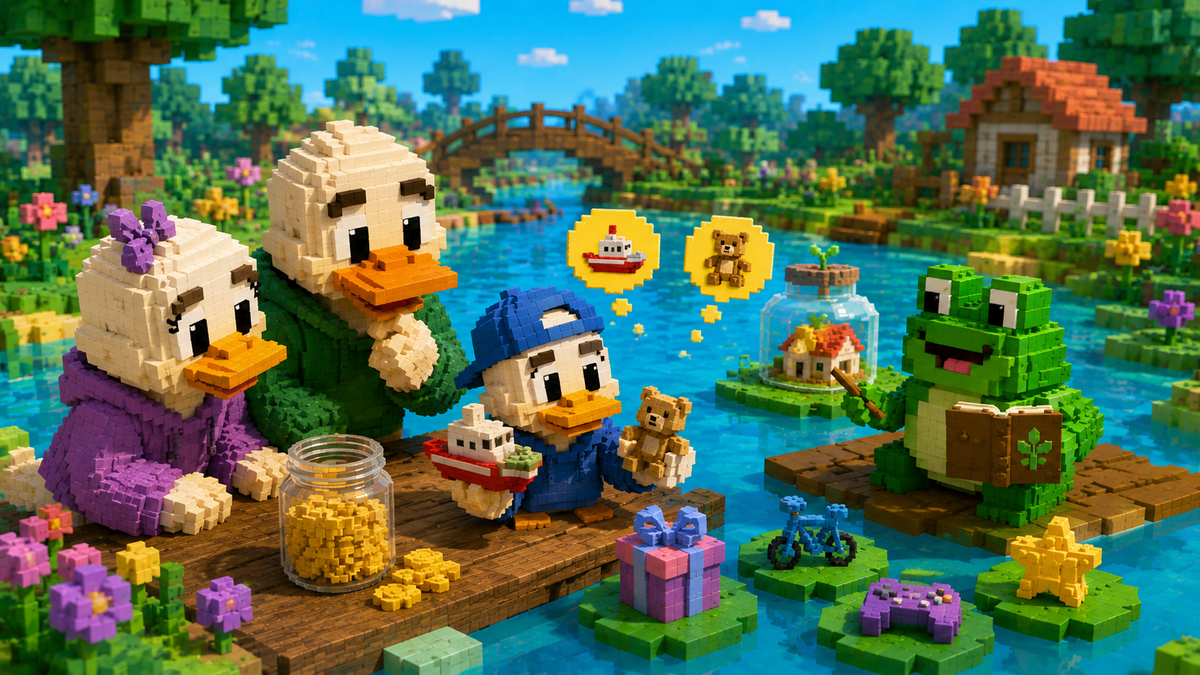
Children understand price surprisingly early. They notice that one toy costs more than another, that some sweets can be bought with a few coins while a bicycle belongs to another universe entirely, and that adults sometimes look at a price tag twice before putting something back on the shelf. What they do not automatically understand is value. Price is printed on the label. Value is something much more elusive. It depends on how long something lasts, how often it is used, how difficult it was to obtain, what had to be given up in order to choose it, and sometimes simply how much it matters to the person who wants it. This is why teaching kids the value of money is not really about teaching them numbers. It is about helping them discover the distance between wanting something and deciding that it is worth having.
A child can know that ten euros is more than five and still have very little sense of what ten euros represents. That understanding develops slowly, through experience. Money begins as an abstract token because children rarely see the work, time and choices that sit behind it. They see the purchase, not the hours spent earning the income, the other expenses competing for the same money, or the decisions that happened before the card was tapped. If we want to teach children about money, we have to make some of those invisible relationships visible without turning childhood into a miniature accounting department.
Value is not the same as price
Adults know this instinctively, although we forget it surprisingly often. A cheap object that breaks tomorrow may be expensive in practice. A costly object used every day for years may offer excellent value. Something that is enormously important to one person may be almost worthless to another. Yet when children first encounter money, price can easily look like an objective measure of how good something is. The expensive version must be better. The discounted version must be a bargain. The thing everyone wants must be worth wanting.
One of the simplest ways to begin teaching kids the value of money is to talk about what happens after the purchase. Not just “How much does it cost?” but “How much will you use it?” “Do you already have something that does the same thing?” “Would you still want it if nobody else had one?” “Will this still matter to you next month?” These questions move the conversation from price toward value. They do not tell the child what to choose. They teach them what to notice.
That difference matters because good financial judgement is not built from a list of approved purchases. A child cannot memorise their way into adulthood by learning that books are good, sweets are bad and saving is virtuous. Real life is messier than that. Sometimes the expensive thing is worth buying. Sometimes the inexpensive thing is a waste. Sometimes spending money on something frivolous brings enormous joy. The useful skill is not learning what to buy. It is learning how to think about buying.
Let money represent something real
For many children, money arrives detached from effort. Coins appear as pocket money, gifts arrive in birthday cards, and digital purchases seem to happen through magical screens. This is not a moral problem. Children do not need to earn every euro they receive. But if money always appears without context, it can remain strangely weightless.
One way to give it weight is to connect money with choices rather than with guilt. Suppose a child has ten euros. Instead of describing the amount as large or small, give it possibilities. Ten euros might buy one particular thing today, or become part of a larger goal for later. It might be divided between spending and saving. It might disappear in several tiny purchases that seem insignificant individually. Suddenly the number has shape.
The lesson is not that one option is always better. The lesson is that choosing one option changes the others. This is at the heart of financial literacy for children. Money has value partly because it is limited, and every use closes some doors while leaving others open. Adults call this opportunity cost. Children can understand it perfectly well without ever hearing the phrase.
Waiting changes the meaning of money
There is something almost magical about the first time a child saves for something they genuinely want. The object changes during the wait. It is no longer simply something sitting on a shelf. It becomes connected to time, patience and accumulated decisions. Every small amount saved makes the goal more real, and every temptation resisted becomes part of the story.
This is why teaching kids saving and spending works better when saving has a destination. “You should save” is too abstract. “You have eight euros and need twelve” creates movement. The child can see progress. More importantly, they can begin to feel that money saved is not money lost. It is choice postponed.
Sometimes the most interesting moment comes at the end. The child finally reaches the amount they need and discovers that they no longer want the thing as much as they did. Adults can be tempted to see this as wasted effort, but it is the opposite. The child has learned that desire changes, that waiting creates information and that having enough money to buy something does not mean buying it is automatically the right decision.
That is a sophisticated financial insight hiding inside a very ordinary childhood experience.
Pocket money can make value visible
Pocket money becomes particularly useful when children are allowed to make real decisions with it. The amount itself matters far less than the autonomy attached to it. A child who receives money but must obtain approval for every purchase is learning that adults manage money. A child who is allowed to make small, safe decisions begins learning that they do.
There will be mistakes. There should be.
A child may spend several euros on something that becomes boring within hours. They may buy three small things and later regret not having enough for the fourth. They may abandon a savings goal halfway through because something else suddenly feels more important. These experiences are not interruptions in financial education for kids. They are the education.
The adult role is difficult precisely because it often involves resisting the urge to rescue the child from every poor choice. If the stakes are small and the purchase is safe, regret can be valuable. A disappointed child may understand “Was it worth it?” much more deeply than one who was simply told “No” before the experiment could happen.
Do not confuse value with sacrifice
There is an old idea that children only value things if they have worked hard for them. There is some truth buried inside it, but taken too literally it can turn financial education into a moral obstacle course. Children do not need to earn every pleasure before they are allowed to appreciate it. Gifts still have value. Shared experiences still have value. Generosity still matters.
What children benefit from is understanding that resources come from somewhere and that choices exist even when somebody else is paying. A family meal at a restaurant can become a small conversation about choosing. A holiday can become a glimpse of planning. A new bicycle can involve discussion about why this model was chosen over another. None of this requires telling children exactly what the family earns or making them feel responsible for adult financial pressures. It simply gives context.
Context creates value because it turns objects back into decisions.
Let children compare
Comparison is one of the most powerful tools in teaching children about money because it introduces judgement without requiring a lecture. Two similar products with different prices create an immediate question: why? Sometimes there is a good reason. One may last longer, contain more, offer better quality or include something useful. Sometimes the difference is mostly branding. Sometimes there is no clear answer.
A supermarket is full of these little mysteries. So is a toy shop, a bookshop or an online store. Asking children what they notice can transform shopping from a sequence of requests into an exercise in observation. Why does the larger packet cost more? Does it cost more per item? Is the sale really useful if we were not planning to buy the thing in the first place? Does the cheaper version do everything we need?
The purpose is not to create tiny professional bargain hunters. It is to introduce the idea that prices contain information, but not all the information. A price tells you what someone is asking. Value is the judgement you make afterwards.
The value of money is also the value of time
Children often understand time more easily than abstract financial quantities. Twenty euros may mean little as a number, but the idea of waiting three weeks for something can feel enormous. This gives parents another route into the subject.
If a child receives regular pocket money, a purchase can be expressed in time. “That would use two weeks of your pocket money.” Suddenly the cost becomes easier to feel. Adults make similar calculations, even if we rarely admit it. We think about how many hours we had to work, how long we had to save, or how much future freedom a purchase might consume.
This does not mean turning every expense into a grim calculation of labour. It simply gives children another unit through which to understand cost. Money is stored possibility, but it is also stored time.
Show that adults make value decisions too
Children can easily believe that financial limits are rules invented specifically for them. They are told to save while adults buy things. They are told to wait while adults can order something instantly. If children occasionally see adults making their own trade-offs, the whole picture becomes more believable.
“We could replace this now, but it still works.”
“This one is nicer, but I don’t think it is worth twice the price.”
“I wanted that, but I decided I would rather keep the money for our trip.”
These small comments reveal something important: adults do not simply possess unlimited money and distribute restrictions downward. They also live inside choices.
This can be one of the most powerful aspects of family financial literacy because it turns financial behaviour into something shared. The child is not standing outside the adult world receiving rules. Everyone is navigating priorities, even if the scale of those decisions is very different.
Experiences can teach value better than explanations
Children often learn financial concepts most deeply when the lesson is hidden inside something else. A game with limited resources teaches scarcity. A marketplace teaches negotiation. A collection creates decisions about what to keep and what to exchange. A long-term goal turns saving into visible progress. A tempting object creates a conflict between immediate pleasure and future possibility.
This is one reason financial literacy games for kids can be so effective when they allow genuine choices. The concept does not arrive as a definition. It arrives as a consequence. If a child spends all their resources in one part of a game and later discovers they need them somewhere else, they understand scarcity through experience. If they negotiate and discover that another player values the same object differently, they begin to understand that value is subjective.
Learning through play works because children are not merely being told how money behaves. They are allowed to encounter versions of the behaviour themselves.
Do not make money the measure of everything
There is an important boundary here. Teaching children the value of money should never mean teaching them that everything has a monetary value. Some of the most important things in childhood have none: friendship, imagination, time spent together, kindness, curiosity, trust. Financial education becomes distorted if children begin measuring every experience through price.
In fact, understanding money well should help reveal the opposite. Price is only one way of measuring something, and often not the most important one. A homemade gift can matter more than an expensive one. An afternoon spent together may be remembered long after a purchased toy has disappeared. The cheapest activity may be the best day of the month.
When children understand that, they are learning value in its broadest sense.
The goal is not to make children afraid of spending
Some adults remember financial education primarily as warnings. Do not waste money. Save for the future. Be careful. Do not buy things you do not need. The intentions were often good, but fear is a poor foundation for a healthy relationship with money.
Children should also learn that spending can be joyful, useful and generous. Money can solve problems, create experiences, help other people and support things we care about. A child who saves successfully should not feel guilty when the moment finally comes to use the money. Saving without ever allowing spending turns money into a score rather than a tool.
The deeper lesson is balance. Spend when the value is worth the cost. Save when future possibilities matter more. Give when generosity matters. Wait when waiting can improve the decision. There is no single correct setting for every moment.
Value is learned slowly
There is no conversation after which a child suddenly understands the value of money forever. Adults still struggle with it. We overpay, buy impulsively, underestimate long-term costs and occasionally discover that the thing we thought we desperately needed is still sitting unopened months later. Financial judgement is not a lesson completed in childhood. It is a habit refined throughout life.
What childhood can provide is a safe beginning. Small sums, small mistakes, small goals and many conversations create a place where judgement can grow. Over time, children begin asking different questions. Not only “Can I buy it?” but “Do I want it enough?” Not only “How much does it cost?” but “Is it worth that much?” Not only “How much money do I have?” but “What else could I do with it?”
Those questions are the real foundation of healthy money habits for kids.
At YOBY, this idea is built into the world children and parents explore together. Money is not presented as a collection of definitions to memorise, but through choices, goals, symbolic currencies, markets, waiting and consequences. A child can encounter value inside an experience, while parents remain part of the same conversation. The YOBY family experience is designed around exactly that principle: learning about money together rather than sending children away to study it alone.
Teaching kids the value of money therefore does not begin by telling them how much things cost. It begins by helping them notice what a choice contains: time, alternatives, desire, patience, effort and the possibility of changing their mind. The price tag is only the beginning of the story.